
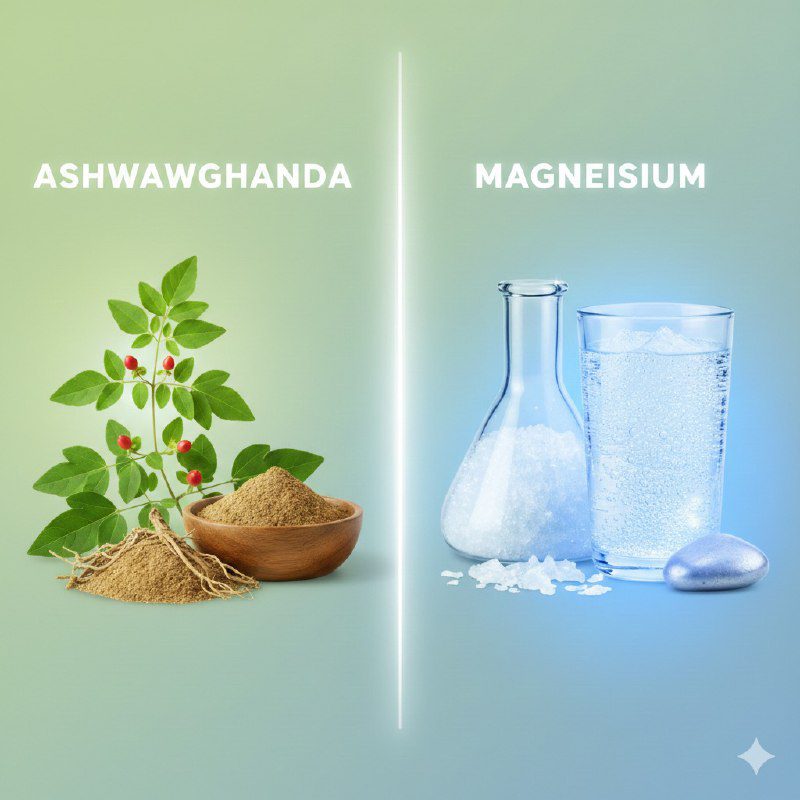
Magnesium vs. Ashwagandha for Sleep: Which Natural Supplement Is Right for You?
You’re exhausted, but the moment your head hits the pillow, your body feels tense, or your mind starts racing. If this sounds familiar, you’re not alone. For many, the quest for better sleep leads to natural supplements, with magnesium and ashwagandha being two of the most popular choices.
But they are not the same. Choosing the right one depends on where your sleep problem originates. This guide breaks down the science in simple terms to help you decide.
The Simple Breakdown: How They Work
Think of these two supplements as specialists tackling different sides of the same problem.
- Magnesium: The Physical Relaxer. This essential mineral acts like a calming signal for your body. It helps relax your muscles and nervous system, preparing your physical body for sleep by supporting the activity of GABA, a key calming neurotransmitter. If you feel physically “wired,” with tight muscles or restless legs, magnesium targets that tension.
- Ashwagandha: The Mental Calm. This ancient adaptogenic herb works on your stress response. It helps lower cortisol levels (the primary stress hormone) and helps your mind adapt to anxiety, quieting the mental chatter that keeps you awake. If your sleeplessness starts with a busy mind, ashwagandha addresses the root cause.
Quick Comparison: Magnesium vs. Ashwagandha
Feature | Magnesium | Ashwagandha |
What it is | An essential mineral | An adaptogenic herb |
Primary Sleep Benefit | Physical relaxation, eases muscle tension | Reduces stress and anxiety to calm the mind |
Best For | Physical restlessness, muscle cramps, waking up tense | Racing thoughts, worry, stress-related insomnia |
Key Mechanism | Activates the parasympathetic (“rest and digest”) nervous system; supports GABA | Modulates the body’s stress response; lowers cortisol |
Onset of Effects | Can be relatively quick, sometimes within hours or days for relaxation | Often takes 1-2 weeks of consistent use for noticeable stress reduction |
Common Forms | Glycinate, Citrate, L-Threonate, Malate | Root extract (often KSM-66®), powder, capsules
|
How to Choose: Listen to Your Body and Mind
Your personal symptoms are the best guide. Ask yourself: “Where is my blockage to sleep?”
Choose Magnesium if this sounds like you:
- “My body feels tense and I can’t get comfortable.”
- “I grind my teeth or clench my jaw at night.”
- “I get twitchy legs or muscle cramps that disturb my sleep.”
- “I feel physically fatigued but physically ‘on.'”
Pro Tip: Not all magnesium is the same for sleep. For best results, experts often recommend magnesium glycinate (or bisglycinate). It’s highly absorbable and gentle on the stomach, making it ideal for evening use. A typical dose for sleep support ranges from 200-400 mg of elemental magnesium, taken 1-2 hours before bed.
Choose Ashwagandha if this sounds like you:
- “I’m tired but my mind won’t shut off.”
- “I lie in bed overthinking my day or worrying about tomorrow.”
- “My stress from the day follows me into the night.”
- “I feel mentally exhausted and burned out.”
Pro Tip: Look for a standardized root extract, such as KSM-66®, which is well-studied for stress and sleep. A common effective dose is 300-600 mg daily. Unlike magnesium, ashwagandha’s effects build over time, and it’s often recommended to take it in cycles (e.g., 6-8 weeks on, followed by a short break).
What about taking them together?
For many people, sleep problems involve both physical tension and mental stress. In these cases, a combination can be synergistic.
- Ashwagandha can help lower the cortisol that’s making you anxious.
- Magnesium can then help your relaxed mind settle into a relaxed body.
If you choose to combine them, a simple approach is taking ashwagandha earlier in the day or afternoon for all-day stress support, and magnesium 1-2 hours before bedtime for physical relaxation.
Important Safety & Next Steps
- Consult a Professional: Always speak with your doctor or a healthcare provider before starting any new supplement, especially if you have underlying health conditions (like kidney or thyroid issues) or are taking medications (for blood pressure, diabetes, anxiety, or sleep).
- Supplements Are Part of a Solution: Neither supplement is a magic pill. For the best results, pair them with good sleep hygiene: a consistent bedtime, a dark/cool room, and avoiding screens and caffeine before bed.
- Diet First: It’s best to get nutrients from food. Magnesium is found in leafy greens, nuts, seeds, and legumes. While you can’t “eat” ashwagandha, focusing on a balanced diet supports overall stress resilience.
Final Thought
The choice isn’t about which supplement is universally “better,” but which is better for you.
- Body tense? → Try Magnesium.
- Mind busy? → Try Ashwagandha.
- Both? → A guided combination may be your answer.
Start by clearly identifying your main sleep obstacle, consider starting with one supplement at a low dose, and give it consistent time to work while tracking how you feel. Your path to more restful nights starts with understanding your own needs.How to Choose: Listen to Your Body and Mind
Remember to consult your doctor for professional advice.
